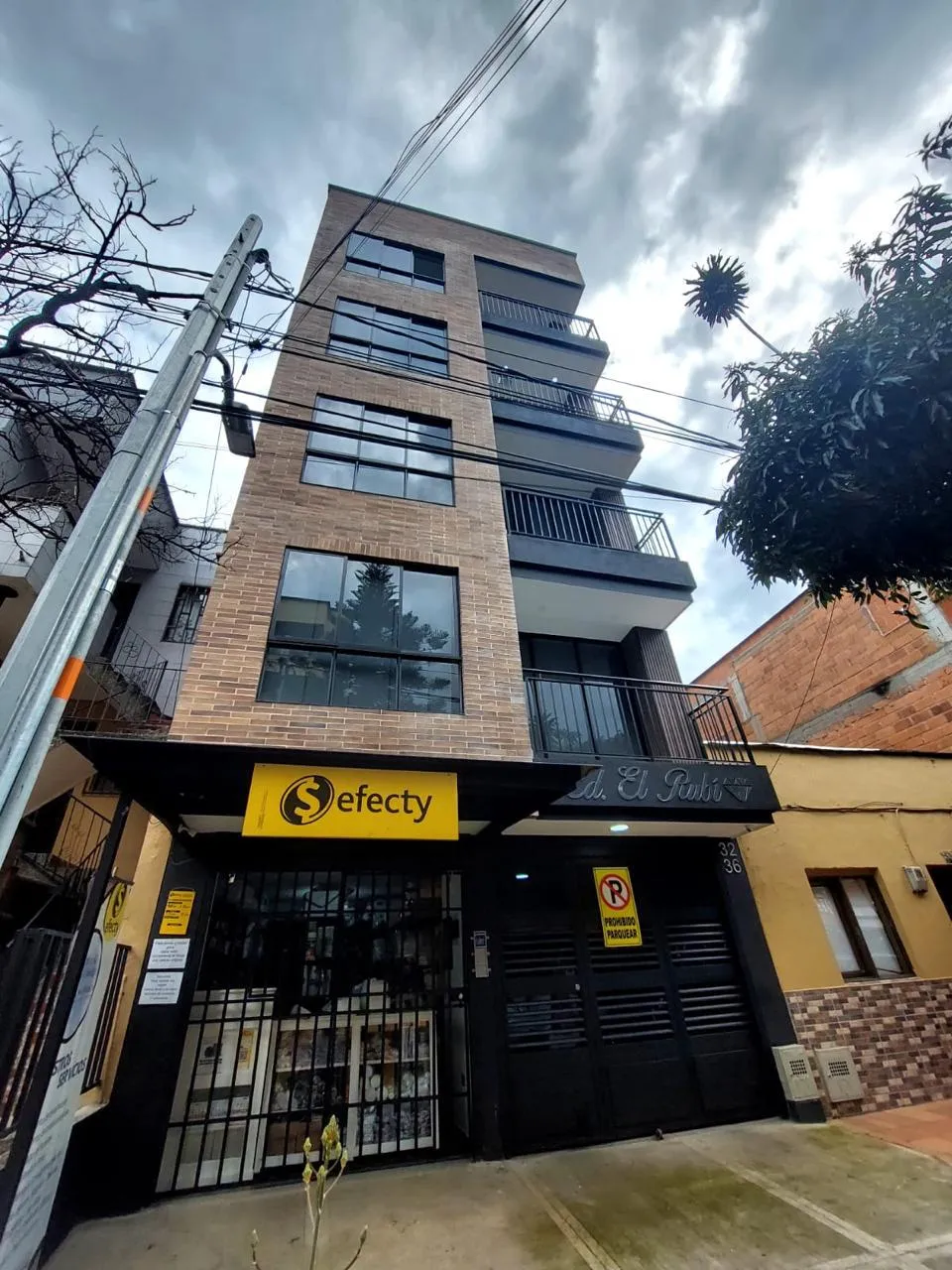
When the earth shakes, buildings speak. The well-built ones move but don't collapse. The ones that aren't — the informal, the old unreinforced, the ones that were never structurally designed — are the ones that kill.
The earthquake of August 10, 2026 proved it once again. As a civil engineer who designs and builds projects in the Medellín Metropolitan Area, I feel the responsibility to explain what most media coverage is not saying clearly enough.
1. What Happened on August 10, 2026
At 7:34 in the morning on Monday August 10, a magnitude 7.4 earthquake with its epicenter approximately 5 km east of San José del Palmar, in the department of Chocó, shook all of Colombia. The movement was felt in cities as distant as Bogotá, Medellín, Cali, Pereira, Manizales, Barranquilla and Cartagena — and in neighboring countries including Panama, Venezuela, Ecuador and Peru.
The most severe damage concentrated in the western part of the country: Cali, Pereira and Manizales reported the most structural collapses. By August 13, the official toll exceeded 281 dead and 3,970 injured, with hundreds still missing under the rubble.
2. What Is the NSR-10 and What Does It Require?
The NSR-10 — Norma Colombiana de Construcción Sismo Resistente, Colombia's seismic construction standard — is the regulation that establishes the minimum requirements any building in Colombia must meet to withstand the effects of an earthquake. It has been in force since 2010, adopted through Decree 926, and was partially modified by Decree 1401 of 2023. It is the most important technical standard in the Colombian construction sector.
Its objective is not to make buildings invulnerable to earthquakes — that is technically impossible. Its objective is that when a strong earthquake occurs, the structure does not collapse and people can evacuate. In technical terms: acceptable damage, collapse unacceptable.
The standard requires, among other things:
- Professional structural design: Every building must have a structural design prepared by a licensed civil or structural engineer, calculated for the seismic forces corresponding to the seismic hazard zone of the municipality.
- Soil study: Soil behavior during an earthquake is decisive. The NSR-10 requires geotechnical studies that characterize the soil and determine the appropriate foundation type.
- Materials meeting minimum specifications: Concrete with minimum compressive strength, reinforcing steel with defined yield limit, quality control during construction.
- Structural ductility: Structural systems must be able to deform without collapsing — absorbing seismic energy without brittle failure.
- Technical supervision: For buildings of certain height and complexity, the standard requires independent technical supervision during construction.
Compliance with the NSR-10 is a condition for obtaining a construction license. No license, no NSR-10. No NSR-10, no guarantee.
3. Why Old and Informal Buildings Are Most at Risk
Here is Colombia's structural problem — and it is serious.
According to the National Professional Council of Architecture, at least 52% of buildings constructed in Colombia were built before the NSR-10 existed. That means more than half of Colombia's building stock was designed and constructed without current seismic requirements.
But there is a second problem equally serious: informality. Of every 5 housing units that appear in the Colombian market, 3 are of informal origin — built without a construction license and therefore without any verification that they meet seismic requirements. 40% of the country's housing stock is the product of self-construction, without technical supervision of any kind.
What the August 10 earthquake confirmed — as every earthquake before it — is that the buildings that collapse are not the well-built ones. They are the informal ones, the old unreinforced ones and the ones that were extended or modified without structural design.
4. How to Know If Your Building Meets the Standard
- Does it have a valid construction license? The license is the document certifying that the Urban Planning Authority verified regulatory compliance, including the NSR-10. No license, no verification.
- Was it built after 2010? Buildings constructed after the NSR-10 came into force are more likely to comply — provided they had a license. Those built before 2010 may be under earlier, less demanding standards.
- Does it have a structural design signed by a COPNIA-registered engineer? Every construction license must include structural plans signed by the responsible professional. This can be verified at the Urban Planning Authority.
- Was it built by a formal developer with a verifiable track record? Formal developers have legal and reputational incentives to comply with the standard. Informal ones do not.
If your building was constructed informally, without a license or before 1984 — when no seismic standard existed in Colombia — the only way to know its vulnerability level is through a seismic vulnerability study conducted by a structural engineer.
5. Why Buying with a License Protects Your Investment and Your Life
Buying an informal property in Colombia is not just a risk to life — it is an investment risk. A building without a license:
- Cannot be easily legalized if built in a risk zone or without meeting urban planning standards
- Has lower resale value because buyers using bank financing cannot acquire it — banks require a license to grant a mortgage
- May be subject to demolition orders or sanctions by urban planning authorities
- Has no technical backing guaranteeing its behavior in future seismic events
The difference between a licensed apartment in a formal project and an informal one is not just a price difference — it is a real risk difference, both for the lives of the occupants and for the value of the asset over time.
6. What This Means for Medellín and Envigado
Medellín and the Metropolitan Area are classified in an intermediate seismic hazard zone according to the Colombian Geological Survey maps. It is not the highest-risk zone in the country — that corresponds to the Pacific coast and the southwest — but it is not a low-risk zone either.
In practical terms: buildings constructed in Medellín and Envigado must be designed to resist intermediate-level seismic forces. The NSR-10 defines specific requirements for this zone, which are less demanding than those of the Pacific coast but significantly more stringent than low-hazard zones.
At Inversiones OTA, all our projects comply with the NSR-10. Every building we develop has a structural design signed by a licensed engineer, a soil study, a construction license and technical supervision during construction. Not just because the law requires it — but because it is the only responsible way to build.
The August 10, 2026 earthquake should not surprise anyone. Colombia is in an active seismic zone. Earthquakes will continue to occur. The question every owner and investor must ask is simple: was the building I live in or invested in built to survive one?
We Build Under NSR-10. Always.
All Inversiones OTA projects have a construction license, certified structural design and technical supervision. If you are evaluating investing in Envigado or Medellín, we are happy to explain how we verify regulatory compliance at every stage of construction.