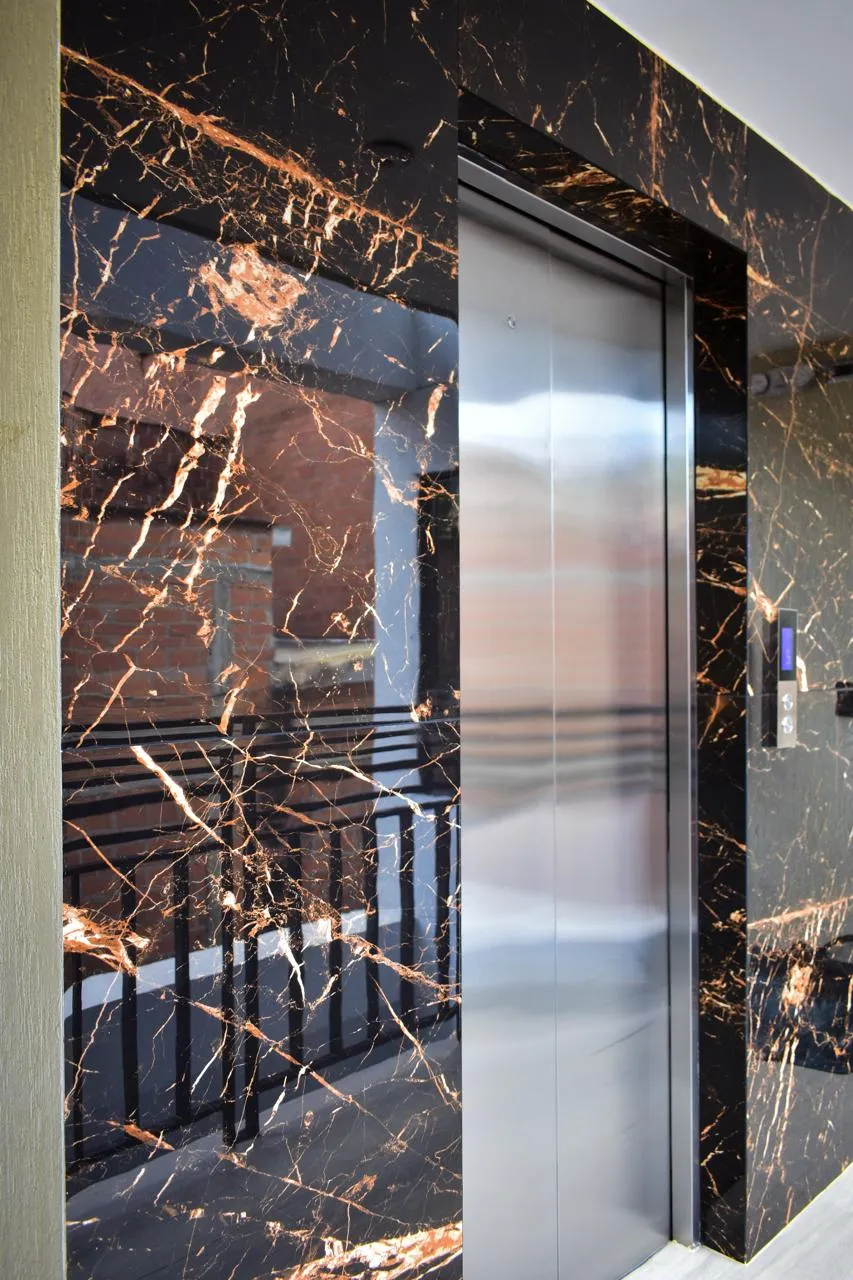
When a developer, architect or property owner asks me "how much does an elevator cost?", the first honest answer is: it depends. But that's not enough. In this article I give you the real ranges I handle in my projects in Envigado and Medellín, so you can budget with confidence.
These are not numbers from an importer or a trade magazine. They are the costs I've paid directly on-site, including at Edificio El Rubí — the first project where OTA Vertical installed an elevator from start to finish.
1. 2026 Cost Summary
For a standard residential elevator in a 4 to 8 floor building in Colombia, the total installed cost in 2026 ranges between:
2. What Factors Define the Price
Not all elevators cost the same, even with the same number of floors. The factors that move the price the most are:
- Number of stops: Each additional stop adds between $8M and $15M COP to the equipment cost, depending on the manufacturer.
- Load capacity: A 4-person (320 kg) elevator is considerably more affordable than an 8-person (630 kg) or mixed-use one.
- Speed: For buildings up to 7 floors, speeds of 0.63 to 1.0 m/s are sufficient and more economical. Buildings of 10+ floors require 1.6 m/s or more.
- Technology: Machine-room-less (MRL) elevators are more modern and sometimes more expensive as equipment, but eliminate the cost of building the technical room.
- Cab finishes: Mirror stainless steel with a decorative LED ceiling (like the one at El Rubí) can add $15M–$30M COP over a basic cab.
- Equipment origin: European and Korean branded equipment has a higher upfront cost but a better maintenance track record in Colombia.
3. Elevator Types and Their Costs
In the Colombian market for mid-rise residential projects, the three most common types are:
- Most common in buildings built before 2015
- Requires a technical room on the top floor or rooftop (~8 m²)
- Equipment cost: $120M – $200M for 5–7 floors
- Advantage: wide network of maintenance technicians in Colombia
- Modern technology: motor integrated inside the elevator shaft
- Eliminates the cost and space of the technical room
- Equipment cost: $150M – $250M for 5–7 floors
- Recommended for new projects with shaft designed from blueprints
- Works with a hydraulic piston — no cables or counterweight
- Ideal for buildings of 2 to 5 floors at low speeds
- Equipment cost: $90M – $150M
- Higher electricity consumption than equivalent electric models
4. Installation Costs: What the Equipment Price Doesn't Include
This is where most budgets fall short. The equipment price is only part of the real cost. What you need to add:
That's why the gap between "equipment price" and "total installed cost" can be 30% to 45% more. A provider who only quotes the equipment without full installation is not giving you the real project cost.
At OTA Vertical we quote everything included — equipment, installation, civil adaptations and commissioning — so there are no surprises on site.
5. Annual Maintenance Cost
An installed elevator is not a one-time cost. Maintenance is a permanent expense that the building's homeowners' association takes on from the first day of operation. In Colombia, maintenance contracts for residential elevators typically include:
- Monthly preventive maintenance: Inspection of cables, pulleys, brakes, doors and electrical system. Cost: $600,000 – $1,200,000 COP/month.
- Corrective maintenance: Repairs for failures or wear. Depends on the equipment and age; minimal in the first 5 years with quality equipment and good preventive maintenance.
- Annual technical inspection: Full inspection with technical report. Recommended to meet insurance and homeowners' association requirements.
- Spare parts: Cables, bearings, frequency drive. Very low cost in the first years with quality equipment.
For a 6-apartment building, this equals $100,000 – $200,000 COP per unit per month — a perfectly manageable cost in the monthly HOA fee when planned from the start.
6. Real Case: Edificio El Rubí, Envigado
At Edificio El Rubí — our first project as OTA Vertical — we installed a 6-person (450 kg) elevator in a 6-floor building in the La Magnolia neighborhood of Envigado. Here's what it cost:
The elevator was operational on the same day the building was handed over. Today, over a year later, it operates without failures and with monthly preventive maintenance.
7. Conclusion: The Elevator as Part of the Project, Not an Add-On
The most costly mistake a developer can make is treating the elevator as something to define at the end of construction. When that happens, costs spike for three reasons:
- The shaft pit wasn't in the blueprints and you have to cut into finished structure
- The hall finishes were already defined without considering the elevator landing doors
- The electrical installation doesn't have the required dedicated circuit
When the elevator is integrated from the blueprints — as we do at OTA Vertical — the cost is predictable, the schedule is not affected, and the result is a building delivered complete from day one.
If you're in the design stage of your project and want to know exactly what you need and what it costs for your specific case, at OTA Vertical we provide quotes at no charge and with no commitment.
How much will the elevator for your project cost?
Tell us the number of floors, the capacity you need and what stage the project is at — we'll give you a real quote in less than 24 hours.
Get a Quote via WhatsApp →